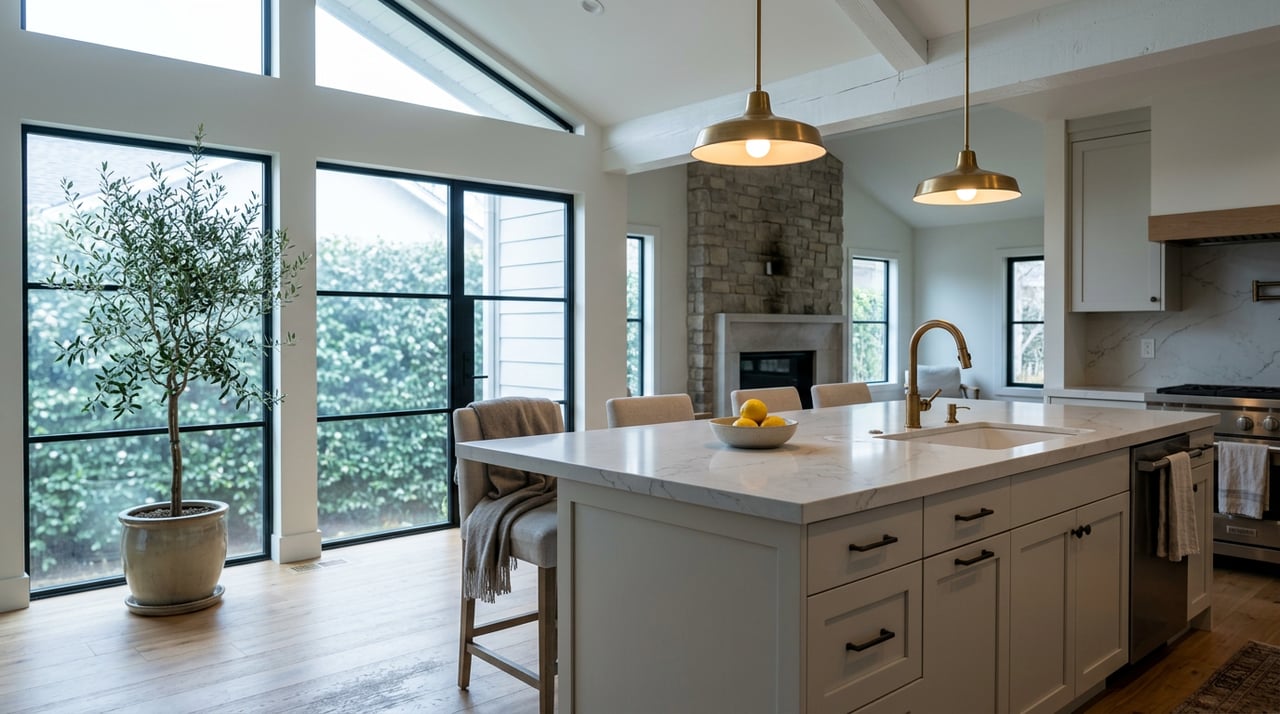
The Seller's Fort Mill Tax Bill Says $3,800. Yours Might Say $7,600.
September 24, 2026
September 24, 2026
Buyers reviewing a Fort Mill closing disclosure tend to glance at one line and relax. The property tax estimate looks reasonable, often lower than whatever they were paying in Charlotte or up north, and it gets filed away as a solved problem. Then the actual bill arrives eight or ten months later, and it does not match the number they budgeted around.
The gap is not a clerical error and it is not the county trying to catch anyone off guard. It is a rule that has been on the books since the Property Tax Reform Act of 2006, and it applies to every home sale in York County. The rate a house gets taxed at depends on who lives in it and whether that person filed the right paperwork, not on the sale price or the seller's history with the county assessor.
South Carolina does not tax homes on their full market value. It applies an assessment ratio first, then multiplies that smaller number by the local millage rate. For an owner-occupied primary residence, the ratio is 4%. For every other kind of residential property, including a second home, a rental, or a house that has not yet been reclassified after a sale, the ratio is 6%.
That half-again difference in the ratio is only the first layer. The 4% classification also unlocks the Act 388 school operating credit, which wipes out the school district's operating millage, typically the single largest slice of the bill, for the owner-occupant only. A property sitting at 6% does not get that credit at all. Stack the higher ratio and the lost credit together, and the effective rate on a non-primary property in York County can run more than double what an owner-occupant pays on an identical house.
None of this is automatic. The classification is not a feature of the house. It is a status the county grants to a specific person who applies for it, and it has to be re-established every time the deed changes hands.
Here is the part that catches Fort Mill buyers off guard: the previous owner's 4% classification belongs to them, not to the property. When the sale closes, the county does not carry that status forward to the new owner. Until the buyer files their own Legal Residence application with the York County Assessor, certifying the home as their primary residence, the property can sit at the 6% rate.
The application has to be filed before the first penalty date for property taxes in the year the buyer first claims the home as their residence, and it typically requires a South Carolina driver's license and vehicle registration showing the new address along with a copy of the recorded deed. Miss the window and the county has no obligation to backdate the correction. A buyer can end up paying the 6% rate, with no Act 388 credit, for a full tax year or longer before the paperwork catches up.
This is why the seller's old tax bill on the listing sheet or the closing disclosure is a poor predictor of what a buyer will actually owe. It reflects the seller's classification, filed under the seller's name, at whatever value the county last set. A buyer's bill starts from a different assessment and a different filing status, and the two numbers only match if the new owner does the paperwork on time.
Fort Mill's median effective property tax rate for an owner-occupied home currently runs close to 0.84% of market value, based on 2026 property tax data. On a $450,000 home, that works out to roughly $3,780 a year, the kind of number that makes South Carolina's reputation for lower property taxes feel accurate.
The same house, still classified at 6% because the buyer hasn't filed or because it's a second home, loses the Act 388 credit entirely. Local tax guidance on York County's assessment structure describes that combination as capable of more than doubling the effective rate compared to an owner-occupied home. On that same $450,000 property, "more than double" means a bill north of $7,600 a year, not the $3,780 the buyer may have budgeted for based on general expectations about South Carolina taxes.
| Classification | Assessment Ratio | Act 388 School Credit | Approximate Annual Tax on $450,000 Home |
|---|---|---|---|
| Owner-occupied, filed on time | 4% | Yes | ~$3,780 |
| Unfiled, second home, or rental | 6% | No | More than $7,600 |
The spread between those two rows is not a rounding difference. It is the entire reason the paperwork deadline matters more than most closing checklists suggest.
Fort Mill and neighboring Tega Cay have some of the highest assessed property values in York County, and both draw a real share of second-home and investment buyers alongside relocating families. For that buyer pool, the 6% classification is not a temporary paperwork gap. It is the permanent rate, because Act 388's primary-residence credit was never available to begin with.
That distinction matters when running the numbers on a Fort Mill investment property or a weekend home. The math is not "6% instead of 4%." It is 6% without the school operating credit that quietly makes up a large share of what owner-occupants save. Anyone comparing a primary-residence purchase to a second-home purchase in the same neighborhood should expect the tax line to differ by more than the headline ratio implies.
Even among owner-occupied homes with the 4% classification properly filed, Fort Mill's tax bill is not uniform. Current property tax data shows the median effective rate running about 0.87% in ZIP code 29715 compared to roughly 0.71% in 29708, a spread driven by which school district and special assessment district a property sits in rather than by anything about the house itself.
Fort Mill and Tega Cay both sit in School District 4, which carries a higher school bond millage than the district covering Rock Hill, largely because District 4 has been funding rapid new school construction to keep pace with growth. A buyer comparing two similarly priced homes, one in Fort Mill's District 4 footprint and one just over the line in a different district, should expect the tax bills to diverge even before either owner files a single form.
The practical takeaway is simple even though the mechanism behind it isn't. Anyone closing on a primary residence in Fort Mill should treat the Legal Residence application as part of the closing process, not an errand for later. Gather the South Carolina driver's license, vehicle registration, and recorded deed, and file with the York County Assessor before the first tax penalty date arrives. For buyers purchasing a second home or investment property, the 6% rate without the school credit should be built into the holding cost from day one rather than discovered on the first bill.
It is also worth marking the calendar for the next countywide reassessment. York County completed its most recent five-year reassessment in 2025, following the same cycle it has kept since 1981, which puts the next one around 2030. Values and bills can shift again at that point regardless of filing status, and a buyer who understands the cycle now will not be surprised by it later.
Does the seller's tax bill tell me what I'll pay? No. It reflects the seller's own filing status and assessed value. A new owner's bill starts fresh and depends on filing the Legal Residence application under their own name.
What do I need to file for the 4% rate? A South Carolina driver's license and vehicle registration showing the new property address, along with a copy of the recorded deed.
What happens if I miss the filing deadline? The property can be taxed at 6% without the Act 388 credit for that tax year, and sometimes longer if the correction isn't caught quickly.
Is the 4% versus 6% gap the same everywhere in York County? The ratio is set by state law and applies the same way everywhere. The dollar impact varies by district and even by ZIP code, since school and special assessment millage rates differ across Fort Mill, Tega Cay, and Rock Hill.
When is the next countywide reassessment? York County's five-year cycle points to around 2030, following the reassessment completed in 2025.
Property tax mechanics like these are exactly the kind of detail that gets missed between an accepted offer and a closing date. If you're weighing a purchase in Fort Mill or anywhere else across the Charlotte region, The Byers Group can walk through what a specific property will actually cost to hold, not just what the listing sheet suggests. Schedule a Consultation to talk through the numbers before you write an offer.
Stay up to date on the latest real estate trends.
Led by Brandy Byers, The Byers Group delivers strategic guidance, elevated marketing, and results-driven representation for buyers and sellers across the Charlotte metro. Connect today and move confidently.